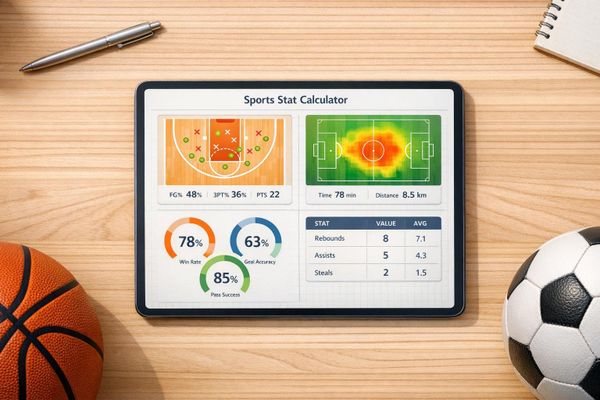
How Data Impacts Player Contract Negotiations
Analytics drive player contract talks — performance metrics, salary benchmarking, and AI injury/career models now shape offers.

The way sports contracts are negotiated has drastically changed. What was once based on reputation and opinions is now driven by data. Teams and agents use advanced analytics to measure performance, predict injuries, and estimate career potential. This levels the playing field, ensuring players and clubs rely on evidence rather than subjective views.
Key Points:
- Data Levels the Playing Field: Players and agents now access tools once exclusive to clubs, reducing information gaps.
- Objective Metrics: Advanced stats like Expected Goals (xG) and Player Efficiency Ratings (PER) replace subjective evaluations.
- Predictive Models: AI forecasts career trajectories and injury risks, influencing contract terms.
- High-Profile Examples: Kevin De Bruyne and Alex Greenwood used analytics to secure better deals.
By 2025, data is central to every negotiation, ensuring contracts align with measurable contributions and future potential.
Helping Kevin De Bruyne get a HUGE contract using data - Jeremy Steele
Challenges in Contract Negotiations Before Analytics
Before analytics became a game-changer, contract negotiations were riddled with inefficiencies and inconsistencies. Players and their agents had to rely on subjective opinions to argue their worth, which often led to imbalances and disputes. Two key issues stood out: subjective player valuations and unequal access to critical data.
Subjectivity and Bias in Player Valuation
In the pre-analytics era, player valuations were driven more by perception and reputation than by measurable performance. Clubs leaned heavily on scouts' opinions, media narratives, and a player's marketability - factors that were often inconsistent and prone to bias.
For instance, a few standout performances in high-profile games could inflate a player's value, even if their overall season was unremarkable. On the flip side, players who consistently performed well but didn’t attract media attention or played for smaller clubs often went unnoticed. This approach overlooked contributions in areas like defensive work, tactical discipline, or playmaking - things that traditional stats like goals and assists couldn’t capture.
This subjectivity created fairness issues. Players with strong media presence often secured higher salaries, even when outperformed by less visible peers. Without standardized metrics, clubs evaluated players using wildly different criteria. As a result, a player’s perceived value could vary drastically depending on who was assessing them, leaving players without a clear sense of their true market worth.
Negotiations often turned into heated debates over opinions rather than collaborative discussions based on evidence. Players frequently felt frustrated, unable to understand why their offers didn’t match expectations or how they compared to their peers.
Information Gaps Between Clubs and Players
Adding to the problem was a massive information imbalance. For years, clubs had a clear data advantage in negotiations. They employed analytics teams, used proprietary tools, and had direct access to detailed match data - resources that players and their agents simply didn’t have.
This imbalance gave clubs the upper hand. They could use their data to justify contract offers, leaving players and agents with little ability to challenge these claims. Without access to comparable data, players had no way to verify whether an offer was fair or if they were being undervalued.
The gap was especially pronounced for younger players or those from smaller markets. These players often lacked the resources to hire specialized advisors, making it easier for clubs to push for longer contracts at lower salaries. Clubs could argue that their internal analysis showed the player’s value was lower than expected, and players had no tools to counter those claims effectively.
Agents also struggled due to limited access to salary benchmarks. Without knowing what comparable players were earning, they couldn’t argue for raises or make strong cases for better terms. This left players negotiating from a weaker position, often unsure if they were getting a fair deal.
Another challenge was the inability to predict injury risks or career longevity using data. Clubs might offer shorter contracts to players they deemed injury-prone, but without evidence, players couldn’t dispute these decisions. Similarly, players had no way to use analytics to prove they could sustain high performance levels over the length of a proposed deal.
On top of that, players and agents lacked access to the comprehensive infrastructure clubs had at their disposal. Clubs benefited from resources like nutritionists, sports scientists, medical experts, and legal teams, all working alongside their data analysts. This left even the most skilled negotiators at a significant disadvantage, unable to compete with the well-equipped club front offices.
How Data Has Changed Player Contract Negotiations
Advanced analytics have reshaped contract negotiations in professional sports, turning them from club-dominated discussions into more balanced exchanges grounded in objective data. This evolution has reduced guesswork, increased clarity, and paved the way for agreements that better reflect a player's true contributions.
Performance Metrics and Analytics Tools
The heart of modern contract talks lies in advanced performance metrics that go beyond the surface-level stats of the past. For example, in soccer, metrics like Expected Goals (xG) and Expected Assists (xA) evaluate the quality of scoring chances rather than just tallying goals and assists. Similarly, basketball has embraced efficiency metrics like true shooting percentage and Player Efficiency Rating (PER), which provide a more nuanced picture of a player's overall impact compared to basic stats like points per game.
These tools offer a deeper understanding by measuring contributions across multiple areas - shooting accuracy, passing, rebounding, and more. This shift has empowered players and their agents. Arsenal defender Ben White's agent, for instance, cited analytics as a key factor in confidently negotiating his salary.
Platforms like StatPro have also played a pivotal role, offering real-time insights that both teams and agents can use during negotiations. Agencies such as Pro Eleven now rely heavily on data to build compelling cases for their clients, presenting detailed analyses that back up salary demands with hard evidence.
But performance metrics are just one piece of the puzzle. Data has also revolutionized how market value is assessed, further influencing contract discussions.
Market Value Benchmarking
Analytics now allow players and agents to benchmark salaries with unprecedented accuracy, comparing compensation across leagues and similar roles. This transparency eliminates much of the guesswork and helps ensure players are fairly compensated relative to their peers.
Independent analytics services have leveled the playing field by providing players and agents with market intelligence that was once exclusive to clubs. By combining salary data with performance metrics, experience, and positional trends, players can present undeniable evidence to justify their pay demands. Clubs now find it harder to justify low offers when faced with such detailed analysis.
Take the case of Alex Greenwood, an elite defender for Manchester City. In 2022, she commissioned an independent analytics report ahead of her contract talks. The report highlighted her standout abilities in areas like buildup play, progressive passing, and ball-carrying - skills that traditional defensive stats often overlook. The result? A successful negotiation that even became a Harvard Business School case study, showing how data-driven strategies can lead to favorable outcomes.
The widespread use of analytics has shifted the balance of power in negotiations. Some agencies now conduct regular performance reviews every three months to keep track of their clients' market value. Beyond current benchmarks, data is also being used to predict future performance and risks.
Injury Risk and Career Length Predictions
Predictive modeling has added a new dimension to contract discussions by forecasting injury risks and career longevity. While performance metrics focus on present contributions, AI tools analyze factors like biomechanical data, injury patterns, and historical trends to predict how a player might perform over the length of a contract.
This benefits both players and clubs. Teams can include performance-based clauses to account for potential injury-related dips, while players can counter claims of being "injury-prone" with evidence-backed data. In the past, players often had little defense against subjective assessments of their durability, which sometimes led to shorter, less favorable contracts.
AI-driven models also project an athlete's career trajectory, estimating how their performance might evolve under different conditions. By 2025, these systems have become incredibly sophisticated, analyzing massive datasets - including player stats, injury histories, and scouting reports - to create detailed profiles. They even predict how players might fit into specific tactical systems, helping both sides make informed decisions.
Contracts now frequently include performance-based incentives tied to these predictive insights, aligning financial rewards with actual outcomes. For instance, NBA teams that invested in robust analytics programs have seen measurable success on the court, as highlighted by MIT research. This trend underscores how data-driven strategies not only reduce uncertainty but also ensure contracts reflect a player's real value.
How Analytics Are Used in Contract Negotiations
Analytics have become a powerful tool in contract discussions, giving players and agents a way to build stronger, data-backed cases for better compensation.
Commissioning Independent Player Analytics Reports
When a player approaches contract negotiations, agents or lawyers often turn to specialist analytics services. These firms start by gathering details about the player's situation and timeline. Using third-party data, they create a tailored analysis of the player's strengths. This approach has changed the dynamics of negotiations - clubs, once advantaged by their in-house data teams and exclusive access to match stats, now face equally detailed insights provided by independent analytics services.
Once the report is ready, it’s handed over to the player and agent, who decide how to use it. They might present the full report, redact certain sections, or highlight key data points to strengthen their position. Tools like StatPro’s real-time insights often complement these reports, reinforcing the metrics with up-to-date performance data. This practice has become common in high-profile negotiations, with some agencies even conducting regular performance reviews every three months to stay ahead. These independent analytics reports now serve as the foundation for well-prepared contract presentations.
Presenting Data to Support Contract Demands
During negotiations, players and agents carefully select metrics that showcase the player's unique contributions. For example, metrics like Goals Direct Assist (GDA) highlight scoring impact, while other stats focus on areas such as buildup play, progressive passing, line-breaking moves, or ball carrying. Comparative benchmarks, often powered by AI, can show how a player performs in high-pressure situations compared to the league’s top 5%, creating a solid argument for specific salary demands.
Analytics also pave the way for creative contract structures. Fixed salaries can be paired with performance-based incentives, such as bonuses for hitting Expected Goals (xG) targets or maintaining certain efficiency ratings. These performance goals, backed by objective data, make negotiations more transparent and defensible. While individual metrics might be debated during the process, the overall reliability of the data often shifts the conversation toward reaching fair, mutually agreed terms.
Case Studies of Data-Driven Negotiations
Real-life examples highlight how analytics are reshaping contract talks. For instance, Kevin De Bruyne used data analysts during his Manchester City negotiations. The report showcased his league-leading GDA metric in 2021, emphasizing his critical role in team scoring. Arsenal’s Ben White also benefited from analytics, with a report that demonstrated his defensive value and market worth.
In another example, Alex Greenwood commissioned an analytics report in 2022, which highlighted her strengths in buildup play, progressive passing, line-breaking moves, and ball carrying. This data helped secure her a three-year contract extension and was later studied at Harvard Business School. Similarly, the Portuguese agency Pro Eleven has incorporated detailed analytics into its negotiation strategies, helping level the playing field between agencies and clubs.
These examples show how data-driven approaches have evolved from a niche strategy into a standard practice across professional sports, transforming the way contracts are negotiated.
The Future of Data in Player Contract Negotiations
The way teams and players approach contract negotiations is undergoing a massive transformation, thanks to advancements in AI and machine learning. These tools are no longer just about analyzing past performance - they’re now capable of predicting future outcomes, reshaping how long-term deals, risk assessments, and strategic planning are handled. What began as basic data tracking has evolved into predictive models that anticipate career trajectories, setting the stage for smarter, more strategic negotiations.
AI-Driven Career Projections
AI and machine learning are now at the forefront of forecasting an athlete's career. By analyzing historical performance, injury trends, and other contextual factors, these systems can provide detailed career projections. They don’t just rely on traditional stats; advanced metrics like xG (expected goals) and xA (expected assists) are also part of the equation, delivering highly accurate predictions.
One of the most game-changing aspects is AI's ability to estimate a player's future value. For example, by comparing a player’s clutch performance metrics against the league’s elite, AI can offer a solid foundation for salary discussions. This means negotiations are no longer just about past achievements - they now include projections of future performance and even marketability.
Advanced Tactical Simulations
Another exciting development is AI’s ability to simulate how a player would perform within specific tactical setups. These simulations analyze technical skills, positioning, and decision-making to determine how well a player fits into a coach’s strategy. For agents, this is a powerful tool to argue for higher salaries or longer contracts, as they can demonstrate a player’s value in a very tangible way.
What makes these simulations so effective is their visual nature. Instead of debating abstract concepts like “fit” or “style,” both sides can review clear, data-backed projections of how a player would perform under specific tactical frameworks. Platforms like StatPro enhance these discussions by providing real-time performance data to validate these projections, offering a complete picture of the player’s potential.
While career projections focus on long-term value, tactical simulations provide a strategic edge during negotiations by showcasing immediate team alignment.
Moving Toward Fully Data-Driven Negotiations
As of 2025, AI has become a central tool in professional sports front offices. These systems now process enormous datasets, including player stats, injury records, scouting insights, social media sentiment, and even biomechanical data, to create comprehensive profiles of athletes.
The analytics landscape is also becoming more accessible. Players and their agents now have access to advanced data tools, narrowing the gap between clubs’ resources and individual players’ capabilities. With more high-profile athletes achieving success through data-driven negotiations, the use of analytics is spreading rapidly. Agencies are also stepping up, integrating data analysis into their standard services to match the support provided by teams.
This shift is creating a more efficient market. Instead of relying on subjective opinions, player valuations are increasingly based on objective metrics. Teams are now building rosters with a long-term vision, using AI to predict player development and injury risks, rather than making impulsive, emotionally driven decisions. Tactical simulations further allow teams to identify players who perfectly align with their strategies, leading to more precise roster construction.
Of course, challenges remain. AI can’t fully account for intangibles like leadership or sudden, unpredictable changes. However, the use of standardized metrics and independent data providers is helping to minimize subjectivity and ensure integrity.
Looking ahead, the future of data in negotiations will likely include even more detailed biometric tracking, such as heart rate variability and fatigue levels, as well as advanced video analysis powered by computer vision. Performance models will incorporate contextual factors like weather, crowd noise, and opponent quality. These advancements will lead to more accurate injury predictions and performance forecasts, supported by standardized benchmarks that ensure fair access to data for all parties.
The evolution is clear: contract negotiations are shifting from subjective guesswork to objective, data-driven analysis. While human intuition and relationships will always matter, the backbone of serious negotiations is increasingly built on AI-powered insights. This growing transparency benefits both players and teams, leading to decisions that reflect true performance value.
Conclusion
Data analytics has reshaped contract negotiations, shifting the focus from subjective arguments to objective performance metrics like Expected Goals (xG), Expected Assists (xA), and efficiency ratings that measure a player's real impact on team success.
One of the most striking changes is how analytics have leveled the playing field between clubs and players. With specialized platforms now widely available, players and agents can access the same sophisticated data that clubs use, giving them the tools to back up their contract demands with hard evidence. High-profile cases have shown how effective these data-driven approaches can be.
Analytics have also influenced the broader landscape of contract negotiations. By November 2025, both clubs and players acknowledge the central role of data, with notable cases making headlines about once or twice a month. Agencies have adopted a more structured approach, integrating data analysis alongside nutrition, sports science, and legal expertise. This professionalization has made negotiations more transparent and grounded in logic. As we discussed earlier, performance metrics and benchmarking are now standard, but the future points to even more advanced tools, such as predictive analytics, AI-driven models, and biometric tracking, which could further refine how contract terms align with actual value.
Platforms like StatPro are at the forefront of this transformation, providing real-time insights and analytics that help both sides make informed decisions. While human judgment and relationships still play a role, data-backed insights now form the backbone of serious negotiations. This shift ensures contracts are based on measurable contributions rather than subjective opinions, creating a fairer, more balanced market where talent is recognized and rewarded for its true impact.
FAQs
How do advanced analytics like Expected Goals (xG) and Player Efficiency Ratings (PER) influence player contract negotiations?
Advanced analytics, such as Expected Goals (xG) in soccer and Player Efficiency Ratings (PER) in basketball, have transformed the way player contracts are negotiated. These metrics go beyond traditional stats like goals scored or points per game, offering a deeper, more objective look at a player's contributions on the field or court.
By using these performance metrics, teams can better assess a player's actual value compared to market trends and similar athletes. For instance, xG can reveal a forward's knack for creating scoring opportunities, while PER provides a detailed picture of a basketball player's overall efficiency. This data-driven approach ensures that contracts more accurately reflect a player's performance and potential, helping both teams and agents make smarter decisions.
Platforms like StatPro further simplify the process by giving teams and players access to real-time analytics, keeping them competitive in a fast-moving market.
How do predictive models help evaluate injury risks and career longevity in player contract negotiations?
Predictive models have become a game-changer in modern contract negotiations, offering insights rooted in data to evaluate a player's potential injury risks and career trajectory. By analyzing elements such as past injuries, workload, and performance patterns, teams and agents can better gauge how these factors might affect a player's future availability and overall contribution.
Using advanced metrics and historical data, these models enable more thoughtful decision-making. Contracts can be tailored to reflect not just a player's current performance but also their long-term potential and associated risks. Tools like StatPro provide the in-depth analytics necessary to back these discussions, helping teams and players reach agreements that balance value with foresight.
How do analytics tools help balance contract negotiations between teams and players?
Analytics tools have reshaped the way contract negotiations are handled, offering both teams and players a wealth of performance metrics and market data. By analyzing game stats, historical patterns, and comparisons with similar players, these tools provide a clear, data-backed picture of a player's value. This shifts negotiations away from subjective opinions and grounds them in solid evidence.
Take StatPro, for instance. This platform dives deep into analytics, showcasing a player’s strengths, consistency, and overall market value. Armed with this information, teams can craft smarter offers, and players can confidently argue for fair compensation. The result? A negotiation process that’s more balanced and transparent for everyone involved.