NFL Defense vs Position: Key Matchup Trends
Compare StatPro and free DVP tools to spot NFL defensive weaknesses, use recent trends over season averages, and improve fantasy lineup decisions.
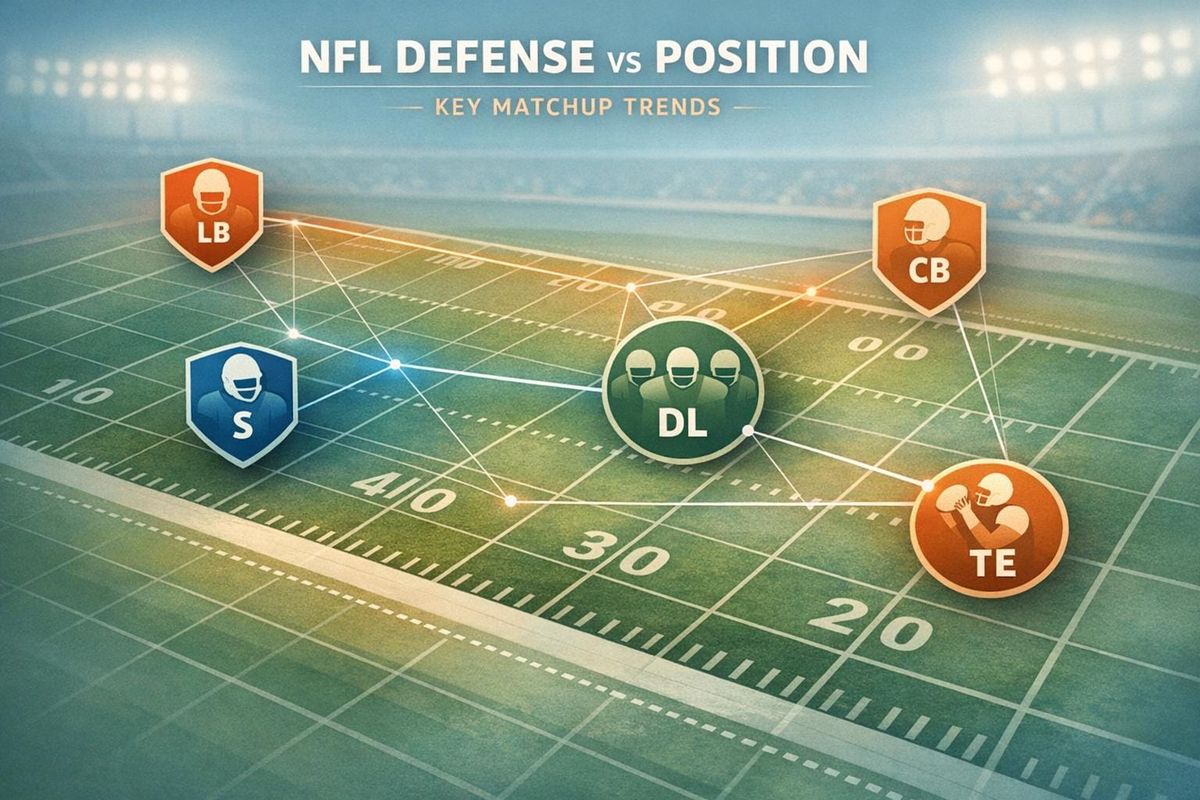
Fantasy football decisions often come down to matchups, and Defense vs. Position (DVP) data helps you identify which defenses give up the most or least fantasy points to specific positions like quarterbacks or running backs. This makes it easier to pick between players, find waiver-wire options, or make trades. For example, in 2025, the Dallas Cowboys allowed 27.43 points per game to quarterbacks, while the Houston Texans only allowed 12.14 points per game.
Here's what you need to know:
- DVP Tools: Platforms like StatPro offer real-time updates, advanced filters, and detailed metrics like blitz rates and air yards. Generic tools like DraftEdge or RotoWire provide weekly updates and basic scoring filters.
- Cost: StatPro costs $9.99/month and integrates with platforms like Sleeper for deeper insights. Generic tools are free but less detailed.
- Key Tip: Use DVP data for tiebreaker decisions, streaming options, or DFS lineups. Focus on recent trends rather than season-long averages.
A combination of free and premium tools can help you make smarter lineup decisions, especially for high-stakes leagues or daily fantasy contests.
1. StatPro
Real-time Data Accuracy
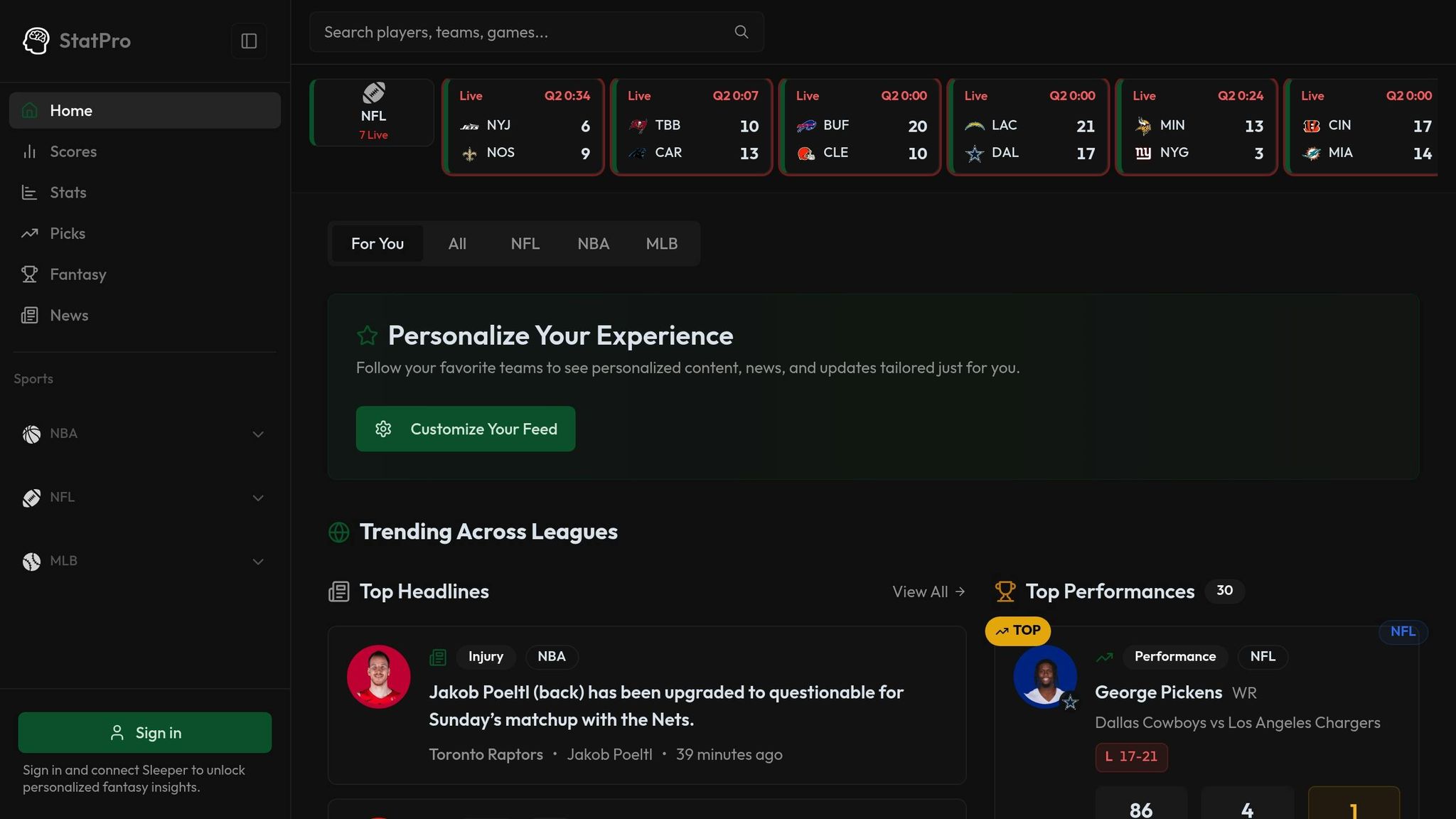
StatPro keeps its defensive value performance (DVP) metrics up-to-date by using a rolling eight-game window that refreshes weekly. This approach ensures it reflects the most recent defensive performances while factoring in the strength of opponents. By giving more weight to recent games, StatPro can spotlight defenses that allow 25% more points than average, making them standout targets for improvement or exploitation. These timely updates provide a solid foundation for diving deeper into the data.
DVP Customization Options
StatPro gives users the flexibility to tailor its insights to their specific needs. You can toggle between scoring formats like Standard, PPR, and Half-PPR, or choose settings optimized for platforms like FanDuel, DraftKings, Yahoo, and head-to-head leagues. Additionally, you can filter data by different timeframes to account for recent trends or injuries. For instance, narrowing the focus to recent games might uncover how a team’s pass defense has been weakened by the absence of a key player.
Advanced Analytics Features
StatPro goes beyond basic DVP rankings, offering detailed metrics that paint a clearer picture of defensive weaknesses. These include stats like Blitz, Pressure, and QB Knockdown percentages, along with coverage-related analytics such as Air Yards and Yards After Catch. This level of detail helps users pinpoint specific vulnerabilities in a defense.
2. Generic DVP Tools
Real-time Data Accuracy
Generic DVP tools, unlike premium platforms, typically update their data on a weekly basis. Instead of providing live, in-game adjustments, these tools refresh rankings after games conclude. For instance, FOX Sports' Week 15 2025 defensive rankings showcase the Houston Texans leading in total defense with 269.2 yards allowed per game, while the Cincinnati Bengals sit at the bottom with 403.8 yards per game. While these updates are dependable for planning purposes, they often fall short when it comes to addressing last-minute changes, such as injuries that impact player availability.
DVP Customization Options
Generic platforms still manage to offer strong customization options, allowing users to tailor data to their league's specific settings. Tools like DraftEdge and RotoWire provide filters for league formats, enabling sorting by positions and scoring rules, such as standard, PPR, or half-PPR. For example, DraftEdge might highlight team differentials, showing the Texans with a -4.1 differential to indicate a tough defense, while the Cowboys' +7.3 differential suggests a weaker matchup. These filters make it easier to align the data with your league's scoring system.
Advanced Analytics Features
Many generic DVP tools go beyond surface-level rankings by incorporating advanced metrics for deeper analysis. DraftEdge, for instance, includes differential indicators that compare a defense's performance to league averages. FOX Sports provides situational stats like third-down conversion rates - highlighting the Broncos converting only 31.9% of third downs compared to the Raiders' 48.9% - and tracks total touchdowns allowed, with the Chargers giving up 30 touchdowns this season. Platforms like RotoWire and Fantasy Alarm use these metrics to offer insights for daily fantasy sports, pointing out defenses like the Seahawks, who allow just 18.6 points per game. Additionally, LineStar provides Net Defense vs. Position reports, which adjust for a player’s recent four-game rolling average, delivering a more current evaluation of defensive matchups.
Ease of Integration with Fantasy Lineups
Applying DVP data to your fantasy lineup decisions is straightforward with these tools. Many platforms, such as DraftEdge and RotoWire, allow users to export stats into spreadsheets or access them directly through apps like CBS Sports. For example, if the Jaguars allow limited yardage but show a positive differential against running backs, it might be wise to bench your RBs. On the other hand, if the Giants rank 30th in pass defense, that could signal a favorable matchup for your wide receivers. Additionally, most tools let you customize feeds to focus on key matchups. While these generic tools offer a solid foundation for lineup decisions, they lack the immediacy and depth that premium options like StatPro bring to the table.
Pros and Cons
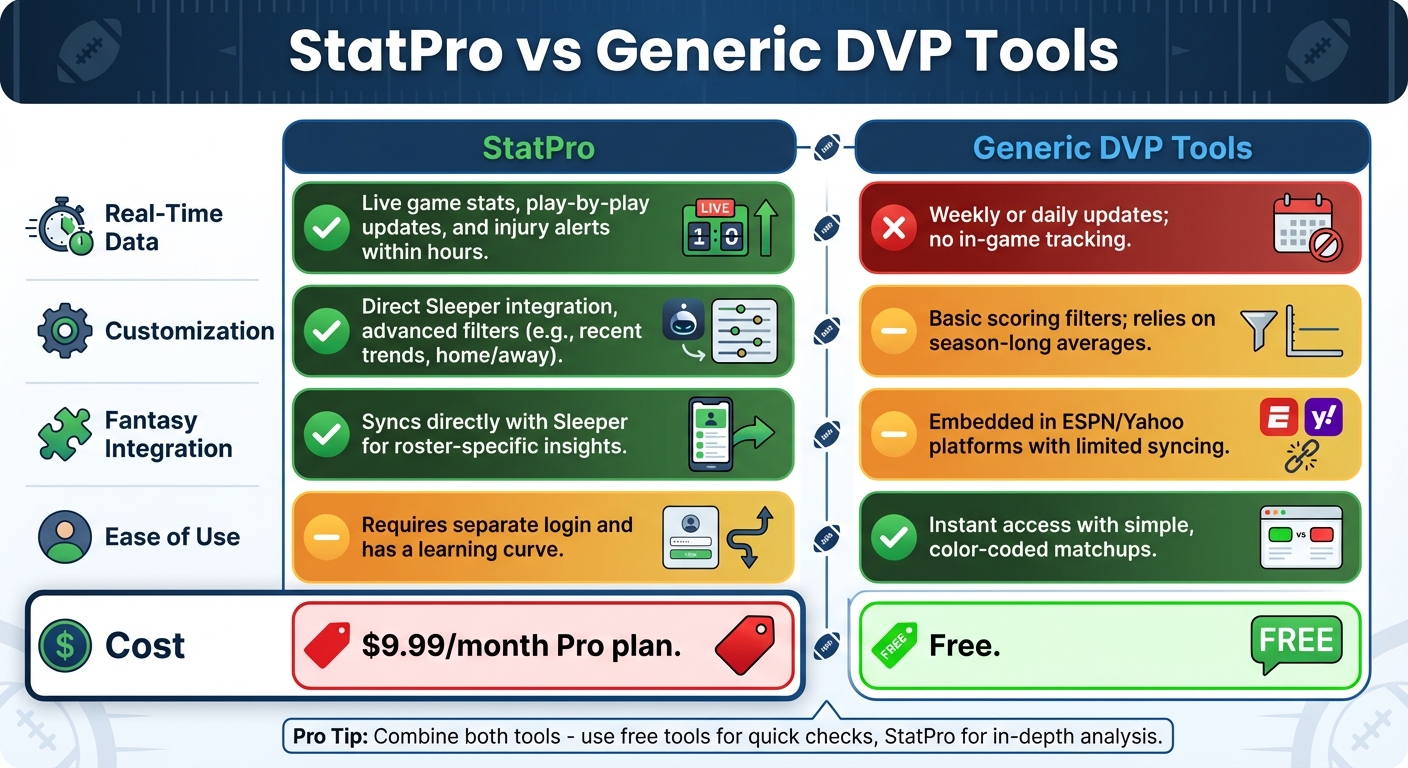
StatPro vs Generic DVP Tools: Feature Comparison for Fantasy Football
Building on earlier points, let’s break down the strengths and weaknesses of StatPro compared to more generic tools. StatPro stands out with live updates, offering in-game stats and injury alerts within hours of official announcements. This can be a game-changer for fantasy managers needing to make last-minute decisions. On the other hand, generic tools like Fantasy Alarm and DraftEdge typically update rankings on a weekly basis, which might not be as helpful for time-sensitive moves.
When it comes to customization, StatPro offers a more tailored experience. It syncs directly with the Sleeper platform, providing insights specific to your roster and league settings. This goes beyond the basic filters found in generic tools, which often rely on season-long averages and don’t account for recent changes like injuries or shifts in player roles. For instance, if you’re analyzing fantasy points allowed to slot receivers over the past three weeks in road games, StatPro delivers that level of detail - something a static DVP table can’t match.
That said, generic DVP tools have their own appeal. They’re free and easy to access through popular platforms like ESPN or Yahoo. For casual managers juggling multiple leagues, this simplicity and zero cost might outweigh StatPro’s subscription fee and steeper learning curve. However, for high-stakes decisions, StatPro’s depth and immediacy can make a big difference.
| Feature | StatPro | Generic DVP Tools |
|---|---|---|
| Real-Time Data | Live game stats, play-by-play updates, and injury alerts within hours | Weekly or daily updates; no in-game tracking |
| Customization | Direct Sleeper integration, advanced filters (e.g., recent trends, home/away) | Basic scoring filters; relies on season-long averages |
| Fantasy Integration | Syncs directly with Sleeper for roster-specific insights | Embedded in ESPN/Yahoo platforms with limited syncing |
| Ease of Use | Requires separate login and has a learning curve | Instant access with simple, color-coded matchups |
| Cost | $9.99/month Pro plan | Free |
A smart approach could be to combine both tools. Start with generic DVP tools to quickly identify favorable or unfavorable matchups, then dive into StatPro for a deeper analysis. This combination can be especially helpful when building DFS lineups or making critical waiver decisions.
Conclusion
Deciding between StatPro and generic DVP tools boils down to how seriously you take your fantasy football management and how much you're willing to spend. If you're a casual manager juggling multiple leagues, free generic tools can do the trick for quick matchup checks - for instance, seeing that the Jaguars allow 15.4 points to tight ends using sortable tables.
On the other hand, if you're a dedicated fantasy player or a DFS enthusiast, StatPro's $9.99/month Pro plan provides an extra layer of sophistication. Real-time injury alerts, Sleeper integration, and advanced filtering features give you the ability to adapt your lineup as breaking injury news rolls in.
A smart approach might involve combining both tools. Start with generic DVP tables to spot extremes, like defenses ranked in the top or bottom five against a position. Then, validate those matchups using StatPro's in-depth analytics to determine if recent injuries or other factors have made certain defenses even more exploitable.
When applying DVP trends to your lineup decisions, focus on recent performance rather than full-season averages. For example, a defense that has struggled against wide receivers over the past four weeks deserves more attention than one whose weaknesses stem from early-season matchups. Cross-referencing DVP data with core defensive metrics can also help you avoid putting too much weight on fluky performances, like points allowed during garbage time.
Use DVP as a tiebreaker for flex spots or streaming decisions, not as a reason to bench your star players. It’s particularly useful for choosing between similarly ranked players, streaming tight ends against defenses with consistent pass defense issues, or stacking DFS lineups against bottom-five units. Whether you stick with free tools or invest in StatPro, focusing on matchup extremes and validating trends with deeper stats can give you a real edge in your fantasy leagues.
FAQs
How can Defense vs. Position (DVP) data help with fantasy football lineups?
Defense vs. Position (DVP) data breaks down how NFL defenses perform against specific offensive positions - quarterbacks, running backs, wide receivers, and tight ends. It shows how many points defenses typically allow to each position, making it a handy tool for fantasy football players. For example, starting a wide receiver against a defense that struggles with pass coverage could boost your chances, while benching a running back facing a tough run defense might save your lineup.
Since defensive performance can shift due to injuries or strategy changes, DVP works best as a flexible, real-time resource. Keeping an eye on updated DVP rankings lets you adjust your lineup smartly, target players who can exploit defensive gaps, and steer clear of bad matchups. This strategy can help you spot breakout players and gain an edge in tight contests.
StatPro’s advanced analytics platform takes it a step further by blending real-time DVP data with other key metrics. It’s designed to help you track defensive trends and make well-informed, data-backed decisions throughout the season.
How can real-time DVP tools like StatPro improve my fantasy football strategy?
Real-time Defense vs. Position (DVP) tools, like StatPro, provide current insights into how NFL defenses stack up against specific offensive positions. These tools help fantasy managers pinpoint favorable matchups, steer clear of challenging defensive units, and uncover potential breakout players.
Using tools like this, you can make sharper lineup decisions, tweak strategies as trends evolve during the season, and maintain a competitive edge in your fantasy league. With StatPro, you're always armed with the most up-to-date data to stay one step ahead.
Why should fantasy players prioritize recent trends over season-long averages in defense vs. position (DVP) data?
Recent trends offer a better snapshot of a defense's recent performance, taking into account variables like injuries, lineup shifts, and adjustments tailored to specific matchups. Relying solely on season-long averages can often obscure these nuances, making them less dependable for weekly fantasy decisions.
By zeroing in on the most up-to-date data, fantasy managers can make smarter lineup calls, identifying defenses that might be underperforming or capitalizing on matchups that look promising based on their latest form.