
Overtime Analytics for Fantasy Leagues
How overtime and extra innings change fantasy scoring across NFL, NBA, and MLB, plus drafting, lineup and waiver strategies using OT stats.

Overtime stats can make or break your fantasy lineup. Here's why: every play, minute, or plate appearance during overtime directly adds to your fantasy points. Whether it's the NFL, NBA, or MLB, understanding how players perform in these crucial moments gives you an edge.
- NFL: Snap counts, play-calling trends, and red-zone efficiency in overtime can boost running backs, wide receivers, and tight ends.
- NBA: Star players dominate in overtime, logging more minutes and stats like points, rebounds, and assists.
- MLB: Extra innings boost hitters’ RBIs and relievers’ save opportunities, especially with the "ghost runner" rule.
To maximize your lineup:
- Draft players who excel in tight games or overtime scenarios.
- Use game spreads and totals to predict overtime potential.
- Monitor overtime performance for smarter waiver and trade decisions.
Tools like StatPro can help you track real-time overtime stats and refine your strategy. Don’t overlook these metrics - they could be the difference between a win and a loss.
How Overtime Affects Each Sport
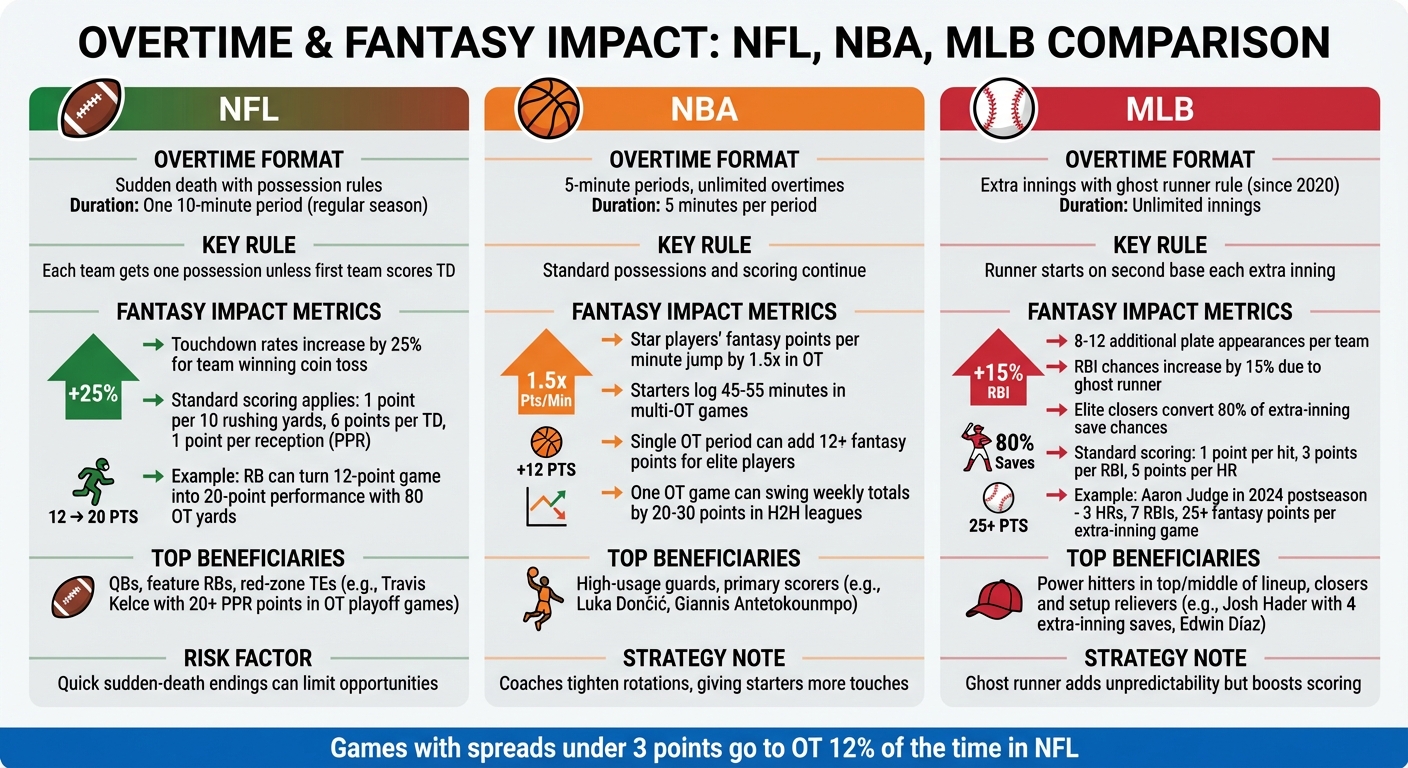
How Overtime Rules Impact Fantasy Scoring Across NFL, NBA, and MLB
Overtime rules differ by sport, and these variations directly influence fantasy scoring. By understanding the nuances of NFL sudden death, NBA extra periods, and MLB extra innings, you can better predict which players might shine when games stretch beyond regulation.
NFL Overtime Rules and Fantasy Impact
In the NFL, regular season overtime allows each team one possession unless the first team scores a touchdown. If both teams have a chance with the ball and the score remains tied, the game enters sudden death, where the next score wins. This structure encourages aggressive red-zone strategies.
Players on the team that wins the coin toss often gain an edge, with touchdown rates increasing by roughly 25% due to the first crack at the red zone. Standard fantasy scoring applies to overtime plays, so yards, receptions, and touchdowns all count as usual. Quarterbacks, feature running backs, and wide receivers become even more valuable in these moments, as teams rely heavily on their top playmakers.
However, the sudden-death nature can also lead to quick endings, limiting scoring opportunities. On the other hand, when both teams secure possessions, longer drives can rack up significant fantasy points. High-upside pass-catchers and tight ends with red-zone roles - like Travis Kelce - often thrive in these scenarios. For example, Kelce’s concentrated usage in overtime playoff games has resulted in massive 20+ PPR point performances. Similarly, overtime in the NBA intensifies focus on star players.
NBA Overtime and Extra Minutes
NBA overtime consists of 5-minute periods with standard possessions and scoring. Fantasy platforms treat these stats the same as regulation, meaning points, rebounds, assists, steals, and blocks all contribute to your total.
The big fantasy impact comes from how coaches tighten rotations in overtime, giving starters more minutes and touches. Star players like Luka Dončić often see their fantasy points per minute jump by 1.5 times in overtime, as they take on more shot attempts and playmaking duties. Guards and wings typically see increased offensive opportunities, while big men can dominate the boards in the fast-paced environment. Players like Giannis Antetokounmpo may rack up 12+ fantasy points in a single overtime period, and in head-to-head leagues, one overtime game can swing weekly totals by 20–30 points. Multi-overtime games push players to log 45–55 minutes, producing extraordinary box scores and fantasy results.
MLB Extra Innings and Fantasy Stats
MLB extra innings stick to the regular structure but add 8–12 plate appearances per team. Since 2020, the "ghost runner" rule starts each extra inning with a runner on second base, significantly increasing scoring opportunities. This rule boosts RBI chances for hitters by about 15% and creates more save and hold opportunities for relievers.
Power hitters can thrive in these situations. For example, during the 2024 postseason, Aaron Judge smashed 3 home runs and drove in 7 RBIs in extra-inning games, earning over 25 fantasy points per outing under standard roto scoring (with hits worth 1 point, RBIs 3 points, and home runs 5 points). Players hitting at the top or middle of the lineup benefit most from the extra plate appearances and inherited scoring opportunities.
For pitchers, late-inning relievers become pivotal. Closers like Josh Hader tallied 4 extra-inning saves, while setup men gained valuable hold opportunities. The ghost runner rule adds unpredictability - a single bloop hit can decide the outcome. Elite relievers like Edwin Díaz convert around 80% of extra-inning save chances, making them valuable waiver pickups for teams frequently involved in extended games. Every strikeout, save, and win counts, and these extra innings can heavily influence fantasy outcomes. Being aware of overtime dynamics is key to gaining an edge in your fantasy league.
Building Fantasy Strategy with Overtime Data
To take your fantasy game to the next level, it's time to incorporate overtime data into your strategy. Savvy fantasy managers use this information to fine-tune their draft picks, set smarter lineups, and make sharper trade and waiver decisions. Let’s break it down, starting with how to approach your draft.
Drafting Players Who Shine in Overtime
In NFL fantasy leagues, targeting consistent running backs is crucial. These players often stay on the field during overtime, racking up valuable points. Remember, every overtime yard and touchdown matters: you earn 1 point for every 10 rushing yards, 6 points per touchdown, and 1 point per reception in PPR formats. Focus on backs from teams known for tight games, as these players get more chances when regulation ends in a tie. For example, in 2023, one running back turned a modest 12-point game into a 20-point performance by adding 80 yards during overtime.
In NBA fantasy, prioritize high-usage guards and primary scorers. These players are often on the court during crunch time, where they can rack up extra points in overtime. For MLB leagues, look for closers and high-leverage relievers from teams with strong offenses but weaker bullpens - these situations often lead to tie games and extra innings, giving them more opportunities for saves, strikeouts, and holds.
When evaluating your draft board, dig deeper into player stats. Some rankings are inflated by one or two massive overtime performances rather than steady production. Reviewing game logs can help you spot these outliers, ensuring you don’t overspend on players whose value hinges on rare overtime spikes. Once your draft is complete, you can adjust your weekly lineups to capitalize on these trends.
Setting Lineups with Overtime in Mind
Point spreads and game totals are valuable tools for predicting overtime potential. For NFL matchups, games with spreads under 3 points go into overtime about 12% of the time. If you’re deciding between two similar running backs, lean toward the one playing in a closer game with a higher point total - this increases the chance of extra snaps in overtime.
In NBA weekly formats, consider streaming or starting players from teams expected to play in close, high-scoring games. For MLB daily leagues, give preference to late-inning relievers on teams often involved in low-scoring contests. Hitters in the top or middle of the batting order can also benefit from extra plate appearances in games that stretch beyond nine innings.
To refine your lineup decisions, look for teams with a track record of close games - such as NFL teams with frequent one-score outcomes or NBA teams with single-digit margins. These trends can serve as helpful tiebreakers when choosing between similarly ranked players.
Leveraging Overtime Stats for Trades and Waivers
Overtime data can also guide your trade and waiver strategies. When evaluating trade options, pay attention to weekly scoring patterns. Players who rely on a few big overtime games for their season averages may be riskier than they seem. If another manager overvalues a player after a standout overtime performance, consider selling high before their production regresses. Consistency metrics can help you separate reliable overtime performers from those who just got lucky.
On the waiver wire, keep an eye out for under-the-radar players who thrive in late-game situations. In the NFL, look for wide receivers or running backs who see increased targets or snaps in the fourth quarter and overtime. Hurry-up backs and dependable chain-movers often fly under the radar. In NBA leagues, bench players who regularly close out games can provide valuable depth. In MLB, setup men who pitch in extra innings can contribute holds, wins, and strikeouts.
Focus on players from teams that frequently find themselves in tight games. A season-long pattern of close contests means more chances to benefit from overtime opportunities. Avoid overvaluing players whose rankings are inflated by one-off overtime performances, and instead, prioritize steady, high-usage players on teams with challenging schedules and frequent nail-biters.
Using StatPro for Overtime Analysis
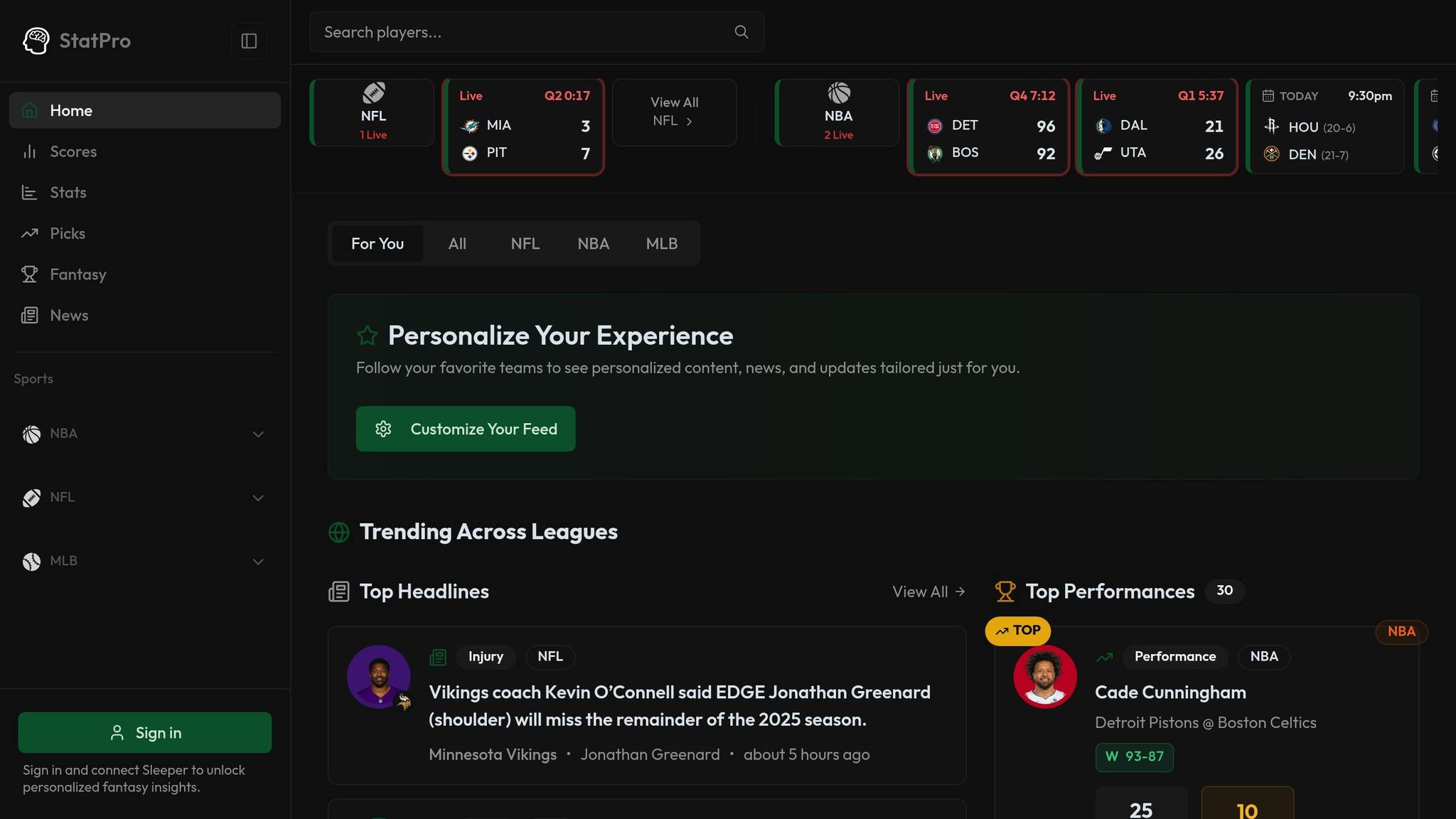
Now that you’ve got a handle on building your fantasy strategy with overtime data, it’s time to put those insights into action using StatPro. This platform provides detailed sports analytics and real-time stats for NFL, NBA, and MLB, giving you the tools to track overtime performance and make smarter fantasy decisions throughout the season.
Finding Overtime Stats in StatPro
To start, log into your StatPro account and head to the Player Stats or Game Logs section. Use the Overtime filter to zero in on specific metrics like yards, touchdowns, or points. For example, in the NFL, you can filter for a quarterback’s passing yards in overtime during the playoffs to spot clutch performers. This functionality isn’t limited to football - it works across NBA and MLB too. Whether you’re analyzing an NBA guard’s shooting percentage in overtime or an MLB reliever’s strikeout rate in extra innings, the overtime filter helps you refine your data for sharper insights.
Setting Up Overtime Filters
Take it a step further with the advanced Situational Analysis filters. Combine Overtime with Clutch (defined as the last 5 minutes of regulation or overtime) to surface deeper metrics like snap counts, shooting percentages, or extra innings RBIs. For example, an NBA filter might reveal a guard scoring 1.5 more points per minute in OT. Need insights for NFL running backs? Navigate to Player Usage > Snap Counts > Overtime Only to find usage rates. You might discover a back who averages 75% of snaps in OT compared to 55% in regulation - valuable info for identifying waiver targets, as higher OT snap counts often translate to bonus fantasy points. These detailed filters give you the precision needed to fine-tune your fantasy lineup. Once set, you can monitor live OT data to make real-time adjustments.
Tracking Live Overtime Performance
The Real-Time Stats dashboard in StatPro updates OT metrics - like points, rebounds, and assists - every 15 seconds during NBA overtimes. This is especially useful for daily fantasy contests, where quick decisions can make or break your lineup. You can even track performance on the mobile app, letting you react instantly. For example, if a forward’s OT usage drops below 60%, you might decide to bench them. Since StatPro pulls stats directly from official providers and updates them every minute, you can rely on accurate live data. For the best results, wait for about five minutes of stable data before making any lineup changes. These real-time updates strengthen the overtime strategy framework you’ve built, ensuring you stay one step ahead in your fantasy leagues.
Conclusion
Taking what we’ve learned about overtime metrics and strategic adjustments, let’s turn those insights into actionable moves for your fantasy lineup.
Overtime and extra innings often create overlooked opportunities in fantasy sports. These extended periods can lead to extra yards, receptions, touchdowns, points, rebounds, assists, plate appearances, or pitching stats - any of which can tip close matchups in your favor.
The key to gaining an edge is using overtime as a tiebreaker in tight decisions. Each week, focus on two or three games with narrow spreads or strong defensive matchups. Pinpoint which of your rostered players stand to benefit most if those games stretch beyond regulation. When managing waivers or trades, check if recent standout performances were fueled by overtime to avoid overpaying for stats that might not be sustainable. Keep a personal tracker of players who consistently shine in overtime versus those who spike occasionally - this will help with those tough lineup calls.
For even more precision, take advantage of tools like StatPro’s Overtime filter and Real-Time Stats dashboard. Spending just 10–15 minutes a week analyzing overtime contributions can help you spot trends and turn predictions into consistent wins.
FAQs
How can I find players with strong overtime performance for my fantasy league draft?
When scouting players who shine in overtime, pay attention to crucial performance metrics such as scoring efficiency, minutes played, and clutch stats during those high-pressure moments. Prioritize players who repeatedly step up or demonstrate noticeable improvement when the game is on the line. Leveraging tools that provide real-time stats and detailed performance insights can give you a solid edge in crafting a smarter fantasy draft strategy.
How do overtime rules in major sports affect fantasy scoring?
Overtime rules can play a big role in fantasy sports, giving players extra chances to rack up stats and boost their fantasy points:
- NFL: With a 10-minute overtime period, players have more opportunities to gain yards, score touchdowns, or kick field goals, all of which can pad their fantasy totals.
- NBA: The 5-minute overtime adds time for players to tally points, grab rebounds, dish out assists, or snag steals, directly enhancing their fantasy output.
- MLB: Extra innings provide batters with additional at-bats for hits and RBIs, while pitchers can log more strikeouts or even secure a decision.
Knowing how overtime works can give fantasy managers an edge when picking players for games that might go the distance.
How can I use StatPro to analyze overtime performance for better fantasy league picks?
StatPro simplifies the process of analyzing overtime performance, giving you a competitive edge in your fantasy league. With access to real-time player stats and performance insights, you can identify which players consistently shine during those high-pressure moments.
Explore the Stats and Scores sections to spot patterns, trends, and key performers when it matters most. This information equips you to make better choices when building your fantasy lineup.